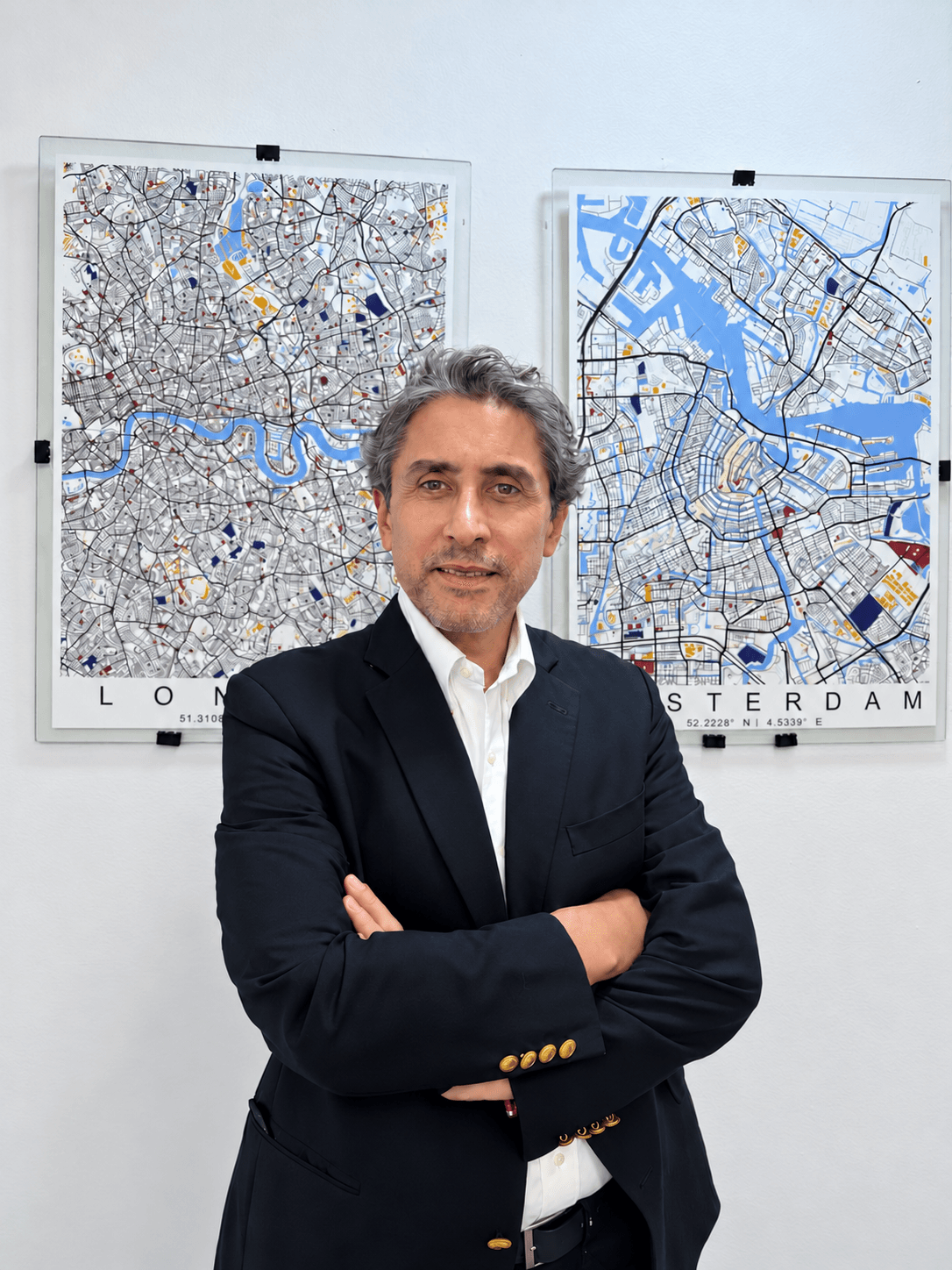
In an interview for El Mercurio de Antofagasta’s Puertos y Logística supplement, Rodrigo Saavedra Burgos, Chairman of the Board of Puerto Antofagasta, outlined his vision of how port and inland infrastructure can contribute to regional growth and opportunities for trade integration.
The full interview follows.
What contribution does the Board envisage Puerto Antofagasta making to the region’s development over the coming years?
Between 8% and 10% of Chile’s FOB export value passes through our berthing areas. That figure requires us to think in decades. We envision Puerto Antofagasta as an integrator of the region’s logistics and port platform, a system linking the port, the La Negra Logistics Development Zone and the Portezuelo Inland Terminal with Ruta 5, the railway and the Sico and Jama border crossings. Our goal is to double annual cargo handling capacity from 3.5 million to 7 million tonnes to support mining, lithium and the energy transition.
How can investments in port and inland infrastructure encourage businesses to establish operations and develop services in the region?
Infrastructure makes land available for development; land enables investment; investment creates jobs. Together with the Regional Government, we signed an investment programming agreement worth approximately CLP 94 billion. On the maritime side, the breakwater expansion and dredging of the harbour basin will increase the port’s capacity to receive vessels, including cruise ships. On land, we are modernising Portezuelo and will consolidate La Negra, covering more than 100 hectares, as a logistics, mining, industrial and technology hub, with supporting services and facilities and land for suppliers and small and medium-sized enterprises to establish operations.
How does Puerto Antofagasta’s planning relate to the opportunities presented by the Bioceanic Corridor?
Our planning is strategic because the development of La Negra and the port’s capabilities are precisely what businesses need to expand their productive activity. The Capricorn Corridor, extending over 3,200 kilometres, broadens the links between Bolivia, Paraguay, Brazil and northern Argentina and the Asia-Pacific region. We are planning the cargo handling and inland support capacity these flows will require, and we manage the Chilean-Paraguayan Free Trade Zone in La Negra. For Antofagasta, the opportunity lies in developing services and businesses associated with these cargoes.
How are logistics chain security and port competitiveness connected?
Security is a prerequisite for competitiveness. A port that aspires to coordinate trade involving four countries must first ensure that legitimate cargo moves through its facilities. Our framework includes a certified Crime Prevention Model and the ISO 27001 standard, and we are advancing container traceability, automated access control and surveillance using artificial intelligence, in partnership with Customs, the Maritime Authority and the police. We support Senator Paulina Núñez’s bill, which would impose additional obligations on concessionaires in tackling organised crime. And we are not waiting for the law to require us to act.
What does being a state-owned enterprise require when pursuing sustainable port development and building trust with the city?
A higher standard. We manage sustainability through an ESG approach encompassing environmental, social and governance considerations, and we substantiate it through ISO 14001 and 45001, work towards ISO 50001, Ecoports, Huella Chile, the Logistics-Mining and La Negra Clean Production Agreements, and our own solar power generation. A decade ago, the city taught us that operations suffer without trust. Public trust in the company rose from 47% in 2022 to 92% in 2026, and we nurture it through port-city integration, local employment, productive linkages with small and medium-sized enterprises and accountability supported by evidence.
What priorities does the Board identify to ensure that investments translate into long-term development?
First, delivering enabling infrastructure on time and carefully designing the concession tender documents, which establish commitments for the port through 2063. Second, incorporating sustainability and security from the design stage of every project. Third, bringing the value chain around the same table: authorities, the Regional Government, the municipality, business associations such as the AIA, the Maritime Chamber, the Customs Chamber, CChC and Aprimin, concessionaires and the community. Antofagasta is experiencing a mining and energy supercycle and the opening of a corridor. Seizing this opportunity requires synchronised execution: that is this Board’s commitment.