As a multipurpose terminal, Puerto Antofagasta has the operational and logistical capacity to serve various types of vessels, including those dedicated to oceanographic research and scientific development.
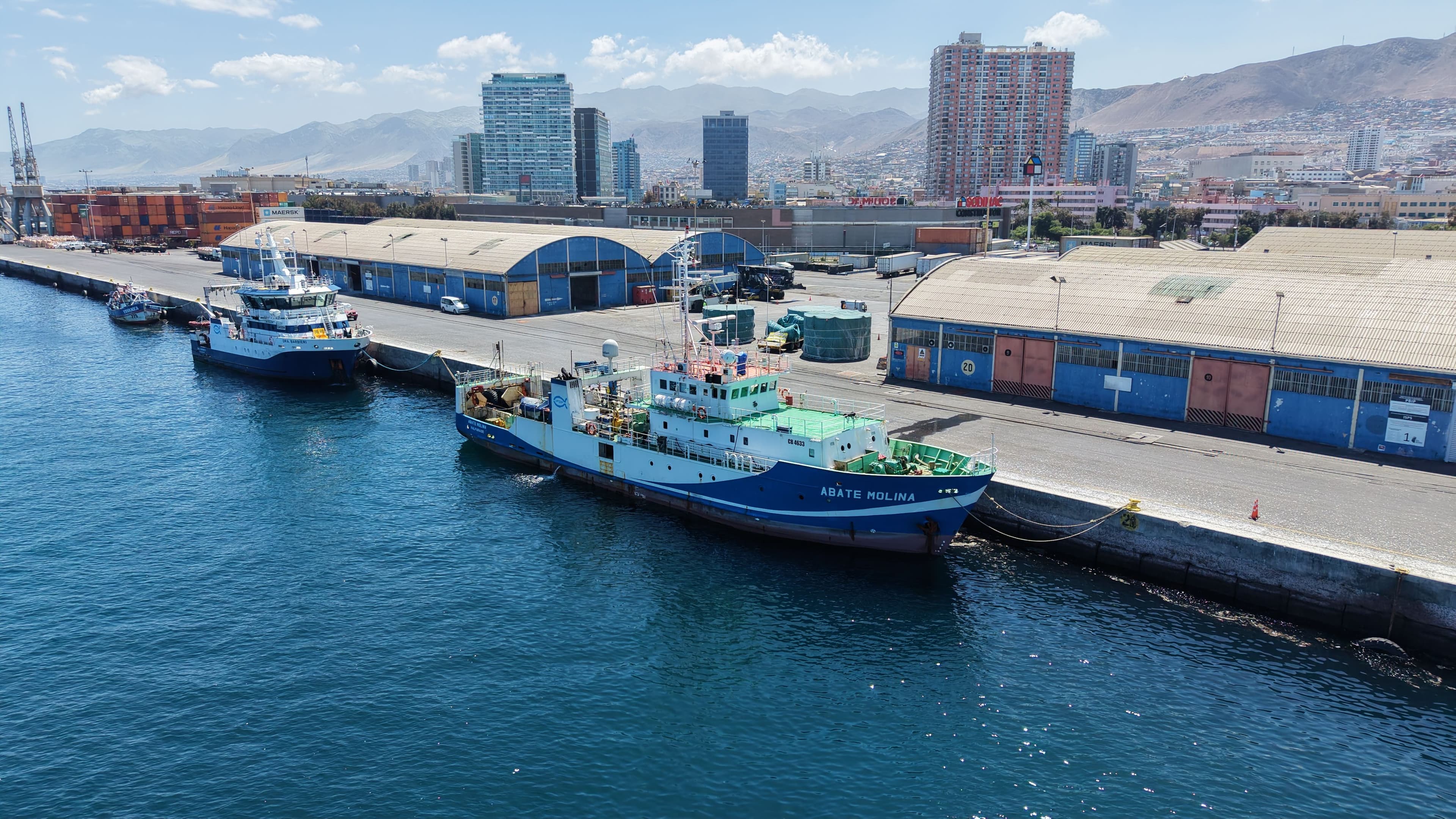
The port recently welcomed the research vessels AGS-61 “Cabo de Hornos” and “Abate Molina”. It coordinated both port calls to facilitate logistical support, which, in the case of the Abate Molina, includes resupply and crew and researcher rotations.
The Chilean Navy’s AGS-61 “Cabo de Hornos” is one of the most modern marine research platforms of its kind. Built by ASMAR in Talcahuano, it features low underwater noise levels, a retractable keel and specialized laboratories. It has participated in research in the Atacama Trench and studies of submarine geology.
Meanwhile, the “Abate Molina”, operated by Instituto de Fomento Pesquero (IFOP) and donated by the Government of Japan in 1991, plays a key role in assessing living marine resources and monitoring species biomass throughout the Humboldt Current System.
Both vessels generate information to improve understanding of marine ecosystems and inform decisions aimed at the sustainable management of marine resources.
By hosting these two research platforms, Puerto Antofagasta puts its port capabilities and infrastructure at the service of science and sustainability.