On 10 November 1926, the Titán crane laid the final block of Antofagasta’s breakwater. A century later, new concrete blocks are arriving at the port, continuing a story closely tied to the city’s growth and its relationship with the sea.
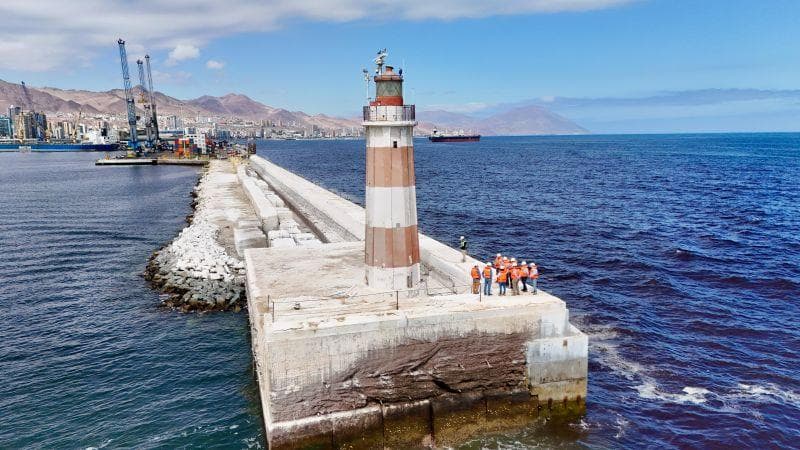
Puerto Antofagasta has received the first precast units for the extension. The breakwater shelters the harbour basin, where vessels manoeuvre as they enter and come alongside.
The timing links two moments in the port’s development. In the early twentieth century, Antofagasta needed infrastructure that could handle growing trade and meet the demands of the nitrate industry. Today, the challenge is to keep the port operating through heavy swells and prepare for the region’s changing logistics needs.
Work began more than a century ago
Construction of the original breakwater began in June 1920. Over the next six years, the engineering works transformed the waterfront and created more sheltered waters for vessels.
The Titán crane played a central role in the construction, helping to position the blocks. The final block was laid on 10 November 1926, a date that takes on fresh significance as the extension progresses.
The small steamship Elcira also has a place in this history. It was the first vessel to enter the harbour basin before its official handover, at a time when Antofagasta was building the infrastructure that would underpin its commercial development.
The next 65 metres of the breakwater
The project will extend the existing structure by 65 metres, with an investment of more than 45 billion Chilean pesos.
The work includes preparing and dredging the seabed, constructing a rock foundation and then installing the precast concrete blocks that will form the new section. It also includes ancillary works and the relocation of the navigation light.
The arrival of the first units marks a step forward in a construction programme that must run alongside the port’s day-to-day operations.
The main aim is to reduce closures caused by heavy swells, which disrupt vessel calls and cargo handling. Better protection from waves is expected to keep the port available for longer and provide greater stability for the supply chains that depend on it.
According to the schedule announced by Puerto Antofagasta, the extension is due for completion in November 2028.
Infrastructure for Antofagasta’s future
The project forms part of Puerto Antofagasta’s Master Plan, which also includes development of the La Negra logistics zone and modernisation of the Portezuelo inland port facility.
Together, these initiatives aim to increase the port system’s potential capacity from 3.5 million to 7 million tonnes a year to meet the needs of mining and emerging industries and support opportunities for closer trade links across the region.
A century after the original breakwater’s final block was laid, the arrival of the first units for its extension once again connects the port’s history with Antofagasta’s future.
The structure that first gave vessels greater shelter a hundred years ago is now being prepared for new challenges, continuing its role in the development of the city and the region.